Stone-Ground vs Roller-Milled Flour: What Difference Does It Make in Bread?
Two bags of flour sit on the counter. One is soft and pale, almost like powder. The other has a little grip to it, with flecks of bran and a smell that reminds you of a grain field after rain. Both can make good bread. But they will not make the same bread. Stone-ground and roller-milled flours behave differently from the first mix to the final slice, and knowing what to expect saves a lot of guesswork.
Two Ways to Open a Wheat Berry
A wheat berry is a small package: starchy endosperm, a bran coat, and a germ. How the miller breaks that package apart shapes the flour in your bowl.
Stone-ground
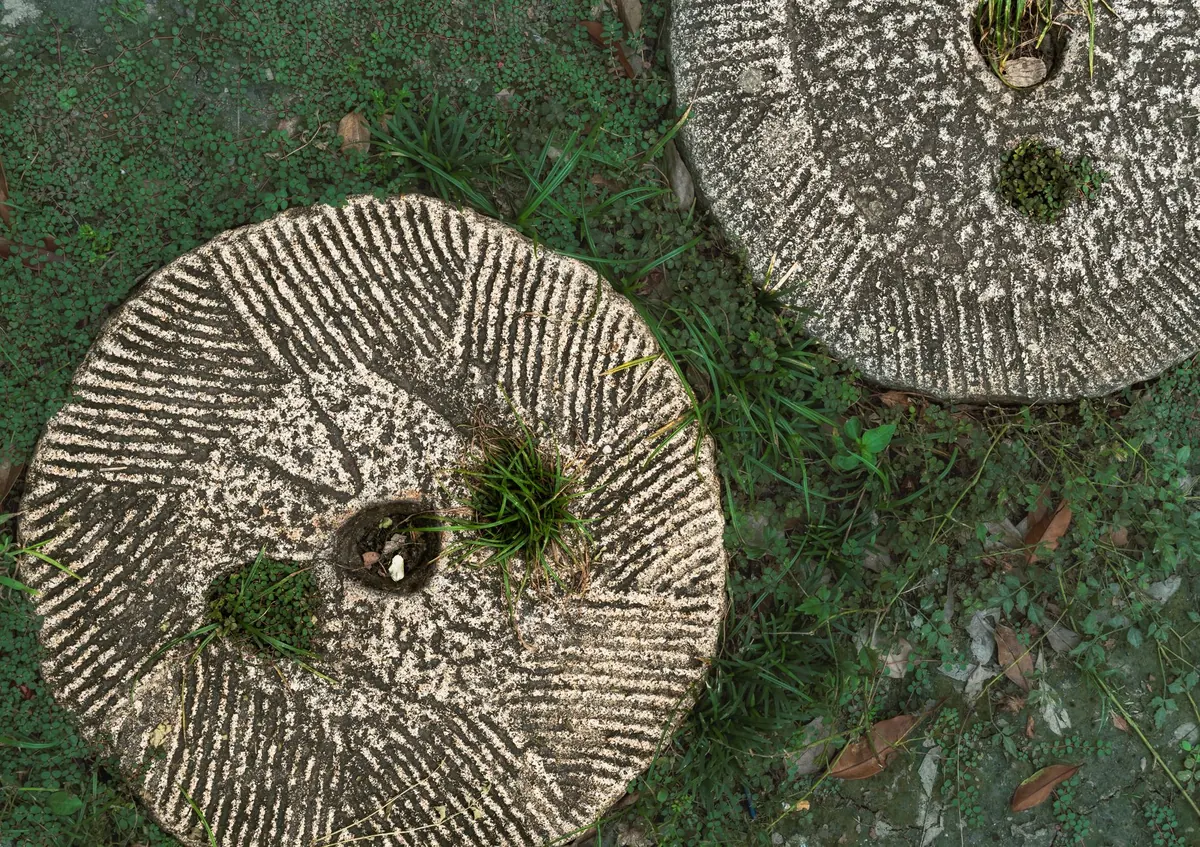
A stone mill grinds the berry between two abrasive surfaces. The result is a blend of particles rather than a single uniform powder. Some particles are fine, some are coarser, and if the whole berry goes in, the bran and germ are in the bag too. Stone-ground does not automatically mean whole grain, though. Many millers sift the flour after grinding to remove some or all of the bran, so a stone-ground white flour is possible. Read the label or ask the miller.
Roller-milled
A roller mill uses steel rollers to crack the berry, then separates bran, germ, and endosperm into streams. The miller can recombine them for whole wheat flour or leave the bran and germ out for white flour. Roller-milled flour tends to be finer and more consistent from bag to bag. That consistency is why many commercial bakeries rely on it.
The useful distinction: stone-ground and roller-milled describe the method. Whole wheat and white describe what is in the flour. You can find stone-ground white flour and roller-milled whole wheat flour. For bread baking, both facts matter.
Texture: What Your Fingers and Dough Feel
Rub a pinch of flour between your fingers. Stone-ground whole wheat feels slightly sandy or grainy, with visible bran specks. Roller-milled white flour feels silky and cool. Those differences carry into the dough.
- Stone-ground whole wheat: coarse particles hydrate slowly, so the dough can feel stiff at first and then soften after a rest.
- Roller-milled white: fine particles absorb water quickly, and the dough often comes together fast.
- Roller-milled whole wheat: often more uniform than stone-ground whole wheat, but the bran still affects the feel and the rise.
If a stone-ground dough feels dry after mixing, do not dump in water immediately. Give it twenty minutes. Coarse bran and larger particles need time to drink.
Flavor: The Germ, the Bran, and the Clock
Stone-ground whole wheat carries the germ’s oils and the bran’s earthy notes. Freshly milled, it can taste nutty, sweet, and faintly grassy. Those oils are also why whole-grain flour has a shorter shelf life. Store it cool and use it within a reasonable time; rancid flour tastes bitter and dull.
Roller-milled white flour is cleaner and sweeter, almost neutral. That is not a flaw. In a long-fermented sourdough or a buttery enriched dough, a neutral flour lets the fermentation and the butter speak. Roller-milled whole wheat can still bring flavor, but its bran is often finer and more uniform, so the wheatiness is less varied from bite to bite.
Freshness matters more than the mill on the bag.
Water Absorption: Why Stone-Ground Feels Thirstier
Bran absorbs water. Coarse particles absorb water more slowly. Stone-ground whole wheat usually needs more water than roller-milled white flour, and it can be less predictable because the particle size varies. Roller-milled white flour is more consistent, so a recipe written for it will behave similarly each time.
A practical approach is to hold back a little water. If a recipe calls for 350 grams of water, start with 320 grams, mix, and rest. Then add the rest gradually until the dough feels right. Signs you may need more water:
- The dough stays shaggy and tight after a ten-minute rest.
- It tears easily during stretch and fold.
- The baked loaf is dense and dry rather than moist and close-textured.
Signs you have added too much:
- The dough spreads without holding shape.
- It feels sticky in a wet, soupy way rather than tacky.
- The crust browns quickly but the center seems underbaked.
Performance in the Oven: Rise, Crumb, and Structure
Bran is sharp on a microscopic level. In a dough, those pieces interrupt gluten strands and can weigh down the rise. Stone-ground whole wheat often produces a denser loaf with a more closed crumb. That can be delicious, especially with seeds, porridge, or a long ferment, but it will not behave like a white sandwich loaf.
Baking with stone-ground whole wheat
Autolyse the flour and water before adding salt and starter. A thirty-minute rest softens the bran and starts hydration. Consider a bran soaker: pour a little hot water over the coarsest bran and let it cool, then add it to the dough. Mix gently and rely on stretch and folds rather than heavy kneading. Watch fermentation closely; whole-grain doughs can move faster than expected.
Baking with roller-milled white
Roller-milled white flour is forgiving. It develops gluten readily, rises predictably, and gives an open, light crumb. If you want more flavor, blend in stone-ground whole wheat at 10 to 25 percent of the total flour. You get wheat character without losing all the rise.
Stone-ground white flour sits somewhere in between. It can perform closer to roller-milled white, but the coarser grind may still need a little more rest and water.
A Side-by-Side Bake You Can Try
Choose a simple lean dough so the flour is the main variable. Use the same flour weight, salt, starter, and fermentation time, then adjust water by feel.
- Mix two doughs: one with stone-ground whole wheat, one with roller-milled white. Keep notes on water added.
- Rest both for thirty minutes, then add salt and starter.
- Bulk ferment side by side, giving each dough a stretch and fold when it spreads.
- Shape both when they feel puffy and hold a dent.
- Bake on the same stone or tray, and let them cool completely before slicing.
- Compare crust color, aroma, crumb openness, and how each loaf tastes on day two.
You will learn more from one comparison bake than from a dozen descriptions. Your kitchen, your water, and your starter are part of the recipe too.
Practical Closing: Match the Flour to the Loaf
Reach for stone-ground flour when you want flavor, texture, and a loaf with some grain character. Use roller-milled white flour when you want a predictable rise, a light crumb, or a neutral canvas for butter, seeds, or a long fermentation. Many home bakers keep both and blend them. Buy in amounts you will use, store whole-grain flour cool, and taste before baking. The best flour is the one that fits the bread you actually want to eat.
Photo: 女子 正真 / Pexels